Computational Antitrust: Recent Developments
On Thursday, October 16th, I’ll have the pleasure of presenting recent developments in computational antitrust (known also as ‘data-driven competition law’ or ‘more technological approach’) at the Bergen Center for Competition Law and Economics Lunch.
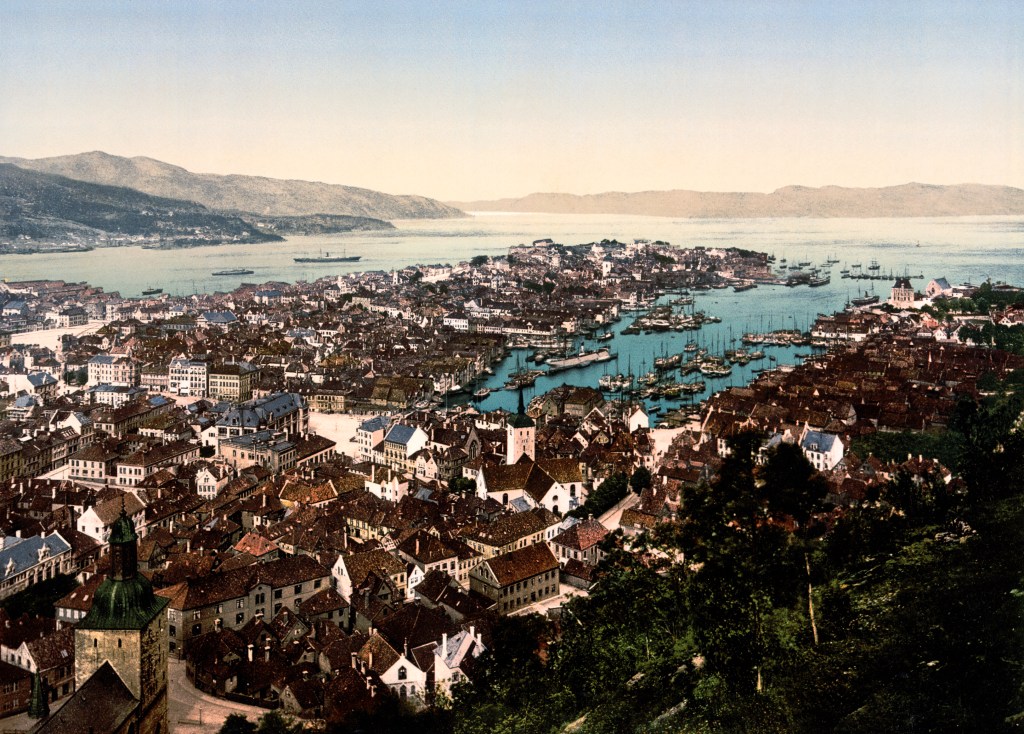
I’m super excited about the opportunity to discuss it with a team of experienced lawyers and economists & see the beautiful North with its fjords.
My personal goal is to focus on intellectual evolution from the acknowledgment of complexity economics by competition lawyers to its operationalization with computational tools. I believe that to truly integrate into the economic paradigm of competition law, every new perspective on the economy needs both a sound theory, which will make it accessible and helpful, and tools to make it applicable. One cannot work without the other. That’s the perspective I’m developing in my PhD project.
Great thanks to Ingrid Margrethe Halvorsen Barlund for the invitation!
Primer
In the last few years, the complexity economics toolkit has proved superior to standard models in predicting outcomes of market activities. These successes brought increasing interest from competition law scholars and practitioners. The same interest is visible at the policymaking level. The need for new analysis tools stems from the incompatibility of standard economics with the 21st-century economy characterized by dynamic competitive processes and exceptionally rapid innovativeness. Fortunately, the new age brings not only problems but also solutions. Present-day computing power enables us to develop agent-based modelling, which could revolutionize competition law enforcement.
The presentation will introduce developments made in recent years in the area of the so-called ‘computational antitrust.’ To offer a comprehensive view, it explains the rising interest of competition lawyers in complex adaptive systems and complexity economics observed in the European Union and the United States since the beginning of the new millennium. The following part of the presentation discusses the ongoing attempts to operationalize these theories in the process of competition law enforcement. Among various computational methods, the focus is on agent-based modelling.
Sources
Complexity Economics
- I. Lianos, Competition Law for the Digital Era: A Complex Systems’ Perspective, CLES Research Paper Series, 6 (2019).
- E. Rovenskaya, What Ecological Systems Can Teach Us About Complexity in The Platform Economy?, IIASA (2021).
- D.L. Moss, Toward a Coherent Approach to Market Power in the Digital Sector Complexity, Growth through Acquisition, and Remedies, Antitrust Bulletin, 67[4] (2022).
- N. Petit, T. Schrepel, Complexity-Minded Antitrust, Journal of Evolutionary Economics, 33 (2023).
- F. Lubinski, Complexity Science in the Debate on the Future of Competition Law, Competition Law Insight, 15 December (2023).
Computational Antitrust
- D. Lim, Can Computational Antitrust Succeed?, Stanford Computational Antitrust, 1 (2021).
- V.H.S.E. Robertson, J. Fleiß, Computational Antitrust and the Future of Competition Law Enforcement, GRUR International, 73[10] (2024).
- E. Wiegand, From Theory to Tech: Computational Antitrust; Concept, Origins, and a Path Moving Forward, European Competition Law Review, 46[8] (2025).
Agency Reports
- I. Lianos, Computational Competition Law and Economics. An Inception Report, BRICS Competition Law and Policy Centre (2021).
- T. Schrepel, T. Groza, Computational Antitrust Worldwide: Cross-Agency Reports, 1–4 (2022–2025).
Agent-Based Modelling
- C. Marsupino, An agent-based simulation of cartels formation in a market with heterogeneous firms, University of Turin (2014),
- T. Davies, Computing Competition with Agent-Based Models: Investigating the Effect of Marketization as a Policy Intervention in Vertically Integrated Zero-Price Markets, Technical University Munich (2021).
- T. Schrepel, J. Schuler, The End of Average: Deploying Agent-Based Modeling to Antitrust, SSRN (2024).
- P. Tartarelli, F. Lubinski, Agent-Based Model of Innovation and Acquisition in the Pharmaceutical Sector, working paper (2025).
 Filip Lubinski
Leave a comment